
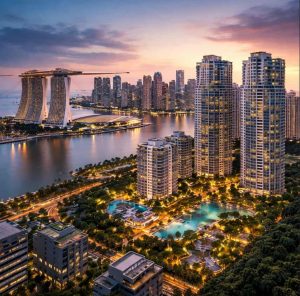
 Singapore’s condominium market is often described as resilient, structured, and surprisingly transparent. That is no accident. Behind steady prices and strong long-term demand sits a housing framework built on careful planning and clear rules, which is reflected in how developments like Pinery Residences price are positioned within the broader market. Far from limiting growth, Singapore’s housing laws play a key role in shaping condo prices in a positive and sustainable way.
At their core, these laws aim to balance affordability, liveability, and investment confidence. For buyers and owners, this creates a market that rewards patience, quality, and long-term thinking rather than speculation.
A tightly managed land supply
Land is scarce in Singapore, and the government treats it as a strategic resource. Through the Government Land Sales (GLS) programme, land is released in a controlled and predictable manner. This steady pipeline prevents sudden oversupply, which can cause sharp price drops in less regulated markets.
For condominiums, this means prices tend to move gradually rather than swing wildly. Developers plan projects years in advance, and buyers can make decisions with a clearer sense of future supply. Over time, this measured approach supports price stability and protects homeowner equity.
Clear rules on foreign ownership
Singapore allows foreigners to buy private condominiums with relatively few restrictions, while limiting access to landed homes. This distinction matters. By keeping condos open to international buyers, the market benefits from a broader demand base without putting pressure on mass-market public housing.
Foreign participation supports prices, especially in prime and city-fringe locations. At the same time, the rules are clear and consistently enforced. Buyers know where they stand. That certainty reduces risk and helps keep condo values grounded in real demand rather than speculation.
Stamp duties that encourage long-term ownership
Stamp duties are one of the most talked-about tools in Singapore’s housing policy. Measures such as Additional Buyer’s Stamp Duty (ABSD) are designed to discourage short-term flipping and excessive leverage.
While these duties can raise upfront costs, they also filter demand. Buyers entering the condo market tend to be more committed and financially prepared. This leads to healthier price growth driven by genuine housing needs and long-term investment goals.
For existing owners, this is a positive outcome. Reduced speculative churn means prices reflect underlying value rather than hype. Over time, that builds trust in the market.
Loan limits that protect buyers and prices
These rules ensure households do not overextend themselves, even during periods of low interest rates. For condo prices, this creates a natural ceiling. Prices rise in line with income growth rather than easy credit. While this may slow rapid surges, it also reduces the risk of sharp corrections. Buyers gain confidence knowing the market is supported by sound financing, not excessive debt.
This conservative lending culture has helped Singapore’s condo market weather global financial shocks better than many other cities.
Strong emphasis on quality and planning
Singapore’s building regulations and planning standards are strict. Developers must meet detailed requirements on design, safety, greenery, and shared facilities. This raises baseline quality across the condo market.
Higher construction standards influence prices, but in a constructive way. Buyers are not just paying for a unit; they are paying for durability, thoughtful layouts, and well-maintained common spaces. Over time, this supports resale values and reduces the risk of rapid depreciation.
Well-planned neighbourhoods also matter. Zoning laws ensure condos are supported by transport links, schools, and amenities. These planning decisions feed directly into long-term price performance.
En bloc rules and redevelopment potential
Collective sales, or en bloc transactions, are another feature shaped by law. Clear thresholds and legal processes protect minority owners while allowing ageing developments to be renewed.
The possibility of an en bloc sale adds an extra layer of value to older condos, especially those on large plots in desirable areas. Even when a sale does not materialise, the potential itself supports prices and gives owners options over the long term.
This structured approach to redevelopment keeps the condo stock fresh without forcing sudden displacement or market disruption.
Transparency builds confidence
Perhaps the most understated strength of Singapore’s housing laws is transparency. Transaction data is publicly available. Policies are announced clearly, often well in advance. Sudden rule changes are rare.
This openness shapes buyer behaviour. Informed buyers make rational decisions, and developers price projects more realistically. The result is a condo market where prices are easier to understand and less prone to emotional swings.
Confidence, once built, becomes self-reinforcing. Buyers are willing to commit because the rules of the game are known.
A market designed for resilience
Taken together, Singapore’s housing laws do not aim to suppress condo prices. Instead, they guide them. Growth is encouraged, but excess is checked. Demand is supported, but speculation is filtered out.
For homeowners, this means steadier appreciation and lower downside risk. For buyers, it means fewer surprises and clearer expectations. For the city as a whole, it means a private housing market that complements public housing rather than competing with it.
In a global context where housing cycles can be volatile, Singapore stands out for its calm and consistency. Condo prices here are shaped not just by market forces, but by a framework that prioritises long-term value. That is a positive story, and one that continues to attract confidence from local and international buyers alike.